From Still to Table: How Canadian Craft Distillers Are Reshaping the Restaurant Experience
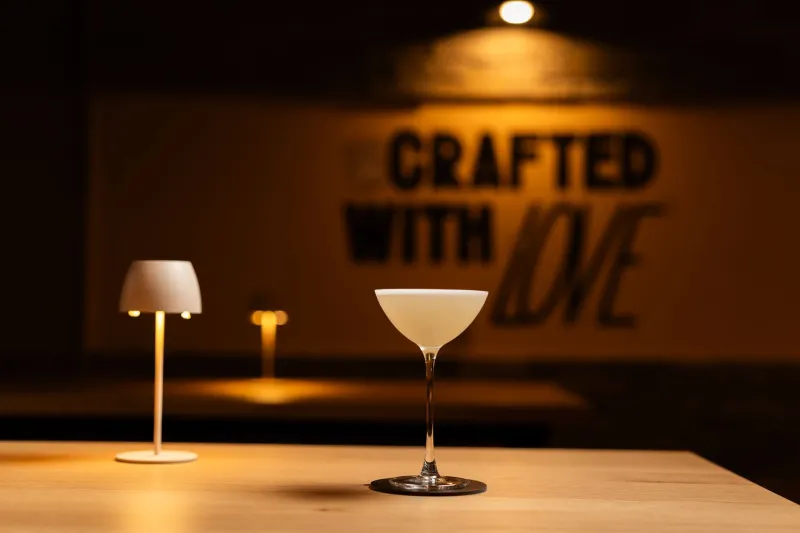
There's a moment that happens in a good restaurant — usually somewhere between the bread basket and the main course — when a drink arrives and you think, this belongs here. Not just because it tastes good, but because it fits. It tells you something about the place, the people, and the land outside the window.
That kind of intentionality used to be reserved almost exclusively for wine. But something has shifted in Canadian dining rooms over the last decade, and the shift smells faintly of juniper, rye, and maple smoke.
Canada's craft distillery sector has exploded. According to industry estimates, the country has gone from fewer than 50 licensed craft distilleries in 2010 to well over 400 today, with producers scattered from Newfoundland to British Columbia. And increasingly, those producers aren't just stocking liquor store shelves — they're sitting down at the table with chefs and restaurateurs to build something more collaborative.
More Than a Cocktail Menu
For many independent distillers, partnering with restaurants isn't just a sales channel — it's a storytelling opportunity. When a spirit is made in small batches from locally sourced grain or botanicals foraged from a nearby forest, there's a narrative built into every bottle. The best restaurant cocktail programs know how to carry that story forward.
Take the growing number of Ontario and Quebec restaurants that have started featuring spirits from producers like Dillon's Small Batch Distillers in Beamsville or Cirka Distilleries in Montréal. These aren't just local alternatives to imported gin or whisky — they're conversation starters. A bartender who can explain why a particular rye tastes the way it does, or what makes a Canadian single malt different from its Scottish counterpart, suddenly becomes part of the dining experience in a way that a bottle of imported liquor never quite manages.
Chefs have noticed. Across the country, culinary teams are working directly with distillers to develop cocktails that complement specific dishes, using the same seasonal and regional logic that guides their menus. Think of it as the beverage equivalent of sourcing your vegetables from a farm down the road — the proximity adds flavour, both literally and figuratively.
The Pairing Conversation
The idea of pairing cocktails with food the way you'd pair wine is still relatively new in Canadian dining culture, but it's gaining real traction. Craft spirits, with their wider range of flavour profiles and production methods, actually lend themselves to this kind of thinking quite well.
A peated Canadian single malt, for instance, can stand up to the richness of a braised short rib in ways that a standard blended whisky might not. A locally distilled aquavit — yes, Canadian aquavit is very much a thing — brings a brightness and herbal complexity that can cut through fatty fish dishes beautifully. And a well-made fruit brandy from a small-batch producer in the Okanagan or the Annapolis Valley can serve as a bridge between a cheese course and dessert in a way that feels genuinely elegant.
The point isn't to be clever for its own sake. The point is that when a drink is made with the same care and regional awareness as the food it accompanies, the whole meal lifts.
What Restaurants Bring to the Partnership
Distillers are candid about the fact that restaurants offer something they can't easily create on their own: context. A bottle of craft gin sitting on a retail shelf is competing with dozens of other bottles. That same gin, featured in a signature cocktail on a curated menu, with a few words about the producer printed alongside it, becomes something else entirely.
For restaurants, the benefits run in the other direction. Featuring local and regional spirits gives front-of-house staff something genuine to talk about. It supports the broader community of Canadian food and drink producers. And frankly, it differentiates a cocktail program in a way that's hard to fake — you either have a real relationship with a real producer or you don't.
At its best, this kind of partnership creates a feedback loop. Chefs suggest flavour directions they'd love to see in a spirit; distillers experiment and return with something new. Restaurants help build the audience that allows small producers to keep operating; producers help restaurants build a reputation for being thoughtful about what they pour.
A Genuinely Canadian Identity
There's something worth sitting with here. Canada has spent a long time in the shadow of more established food and drink cultures — French cuisine, American barbecue, Scottish whisky, Italian winemaking. The craft distillery movement, like the farm-to-table movement before it, is part of a broader effort to develop a food and beverage identity that's distinctly ours.
That identity isn't monolithic. It's shaped by Indigenous traditions of fermentation and plant knowledge, by the waves of immigration that have brought new ingredients and techniques to every corner of the country, by the particular character of Canadian grain and water and climate. A craft spirit made in Yukon tastes different from one made in Nova Scotia, and that's not a problem — it's the whole point.
When a restaurant chooses to build its cocktail program around Canadian craft spirits, it's making a statement about what it values. It's saying that the story of this place matters, that the people making things here deserve support, and that a great meal is about more than what's on the plate.
Raising a Glass at Resto Maynard
Here at Resto Maynard, we believe that warm Canadian hospitality extends to every aspect of the dining experience — including what's in the glass. We've always been drawn to producers who care as much about their craft as we care about ours, and the country's independent distillers represent exactly that kind of commitment.
Whether you're settling in for a full tasting menu or stopping by for a drink before dinner, there's real pleasure in knowing that what you're sipping was made with intention, by someone who genuinely loves what they do, not far from where you're sitting.
That, in the end, is what makes a meal feel like more than a meal. And it's what keeps us excited about the direction Canadian dining is heading.