Carrying the Kitchen Forward: The Next Generation Reshaping Canada's Family Restaurants
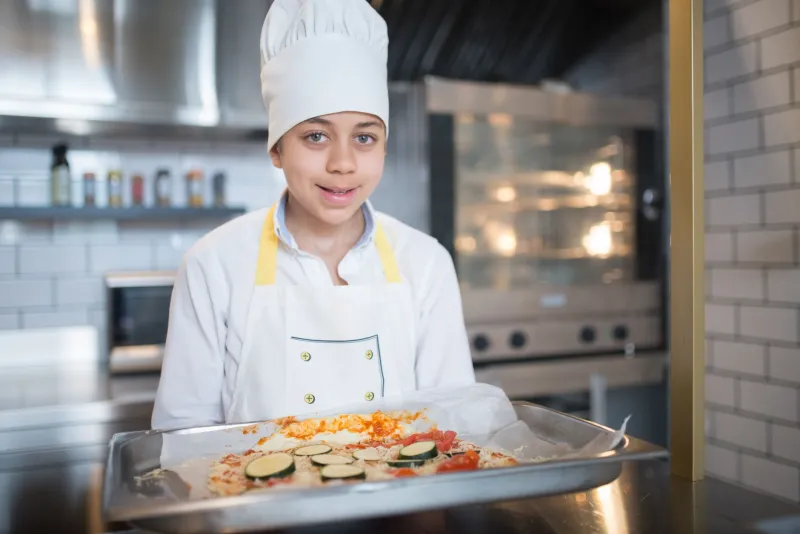
For the sons and daughters who grew up watching their parents build something from nothing — peeling vegetables before school, folding napkins on Sunday mornings, learning the rhythm of a dining room before they could name what they were learning — taking over the family restaurant is never just a career decision. It's a negotiation between love, legacy, and the need to be their own person.
Across Canada, a compelling wave of second-generation operators is doing exactly that: stepping into kitchens and dining rooms built by their parents, and figuring out, in real time, how to honour what came before while building something that's genuinely theirs.
The Weight of What Was Built
There's a particular kind of pressure that comes with inheriting a beloved restaurant. It's not the same as starting from scratch, where failure is painful but ultimately your own. When you take over a place that your mother opened thirty years ago — a place where generations of families have marked their milestones, where regulars have been coming since before you were born — the stakes feel different.
You're not just managing a business. You're the custodian of other people's memories.
"The first thing I did when I took over was nothing," admitted one second-generation operator in Halifax, whose parents opened their Portuguese-Canadian restaurant in the early 1990s. "I spent six months just watching. Listening. Understanding what the regulars actually came for, what they'd be devastated to lose. You can't start making changes until you understand what you're working with."
That instinct — to observe before acting — is something many second-generation operators describe as foundational. The temptation to immediately modernize, to signal your own identity through sweeping changes, is real. But the restaurants that navigate this transition most successfully tend to be the ones that approach it with patience and genuine respect.
Where Tradition Ends and Innovation Begins
The question every inheriting chef or operator eventually faces is: what's sacred, and what's just habit?
Some things are genuinely sacred. The recipe your grandmother brought from her home country. The way the dining room is arranged so that regulars can see the door. The fact that the kitchen closes early on Sundays because that's when the staff has family dinners of their own. These things carry meaning beyond their function, and changing them without cause is a kind of erasure.
But other things that feel sacred are actually just inertia — a dish that's been on the menu for fifteen years because no one thought to question it, a supplier relationship that made sense in 1998 but hasn't been re-evaluated since, a service style that feels outdated to newer guests even if the regulars don't notice.
Separating those two categories is genuinely hard work. It requires honest conversations with parents who may have complicated feelings about letting go, with long-time staff who've been doing things a certain way for years, and with regulars who may interpret any change as a betrayal.
"My dad thought I was going to ruin everything when I took the schnitzel off the menu," laughed a Toronto-based chef who took over her family's Austrian-Canadian restaurant four years ago. "And then three months later he admitted the new dish I replaced it with was better. But it took those three months."
Bringing Fresh Ideas Without Losing the Soul
The most successful second-generation transitions tend to share a few common traits. First, they're evolutionary rather than revolutionary — changes come gradually, allowing both staff and regulars to adjust. Second, they're rooted in the same values that made the original restaurant worth preserving: quality ingredients, genuine hospitality, a commitment to the people in the room.
What changes is often the expression of those values rather than the values themselves. A second-generation chef might bring culinary school training or international experience that their parents didn't have access to, applying those skills to the same recipes in ways that elevate them without replacing them. They might update the beverage program to reflect what Canadian diners are drinking now. They might redesign the space in a way that honours the original aesthetic while making it feel current.
They might also bring perspectives that their parents, by virtue of their generation or background, simply didn't have. A queer second-generation operator in Vancouver described making her family's Chinese-Canadian restaurant more explicitly inclusive — not as a departure from her parents' vision, but as an extension of their core belief that everyone deserves to feel welcome at the table.
"My parents built this place on hospitality," she said. "I'm just being more specific about who that hospitality is for."
The Regulars as Stakeholders
One of the most underappreciated challenges of a generational transition is managing the expectations of long-time guests. These are people who, in many cases, knew the original owners before they knew their children. They watched the second generation grow up. They have opinions.
Some regulars are remarkably adaptive — curious about what the next chapter will bring, supportive of the new direction, excited to watch someone they've known since childhood come into their own. Others are more protective of the experience they've come to rely on, and can feel genuinely unsettled by changes, even small ones.
The operators who navigate this most gracefully tend to be the ones who involve their regulars in the transition, at least symbolically. Asking for feedback. Explaining the thinking behind changes. Acknowledging the history while pointing toward the future.
That kind of transparency builds trust — and trust is the currency that neighbourhood restaurants run on.
A New Chapter, Not a New Story
What's most striking about Canada's second-generation restaurant operators, taken as a group, is how deeply they care — not just about food, but about the specific communities their families built into. They're not trying to turn their parents' neighbourhood spots into destinations for tourists or food media. They're trying to make them better for the people who already love them, while opening the door a little wider for people who haven't found them yet.
That's a fundamentally Canadian kind of ambition: not flashy, not self-aggrandizing, but rooted in something real.
At Resto Maynard, that same spirit lives in every service. The belief that a restaurant is more than the sum of its dishes — that it's a relationship, an ongoing conversation between a kitchen and a community — is exactly what makes the work of the next generation so worth watching.
They're not just carrying a kitchen forward. They're carrying a whole way of being in a neighbourhood. And they're doing it with remarkable grace.