Less on the Plate, More on the Palate: The Case for Restraint in Canadian Fine Dining
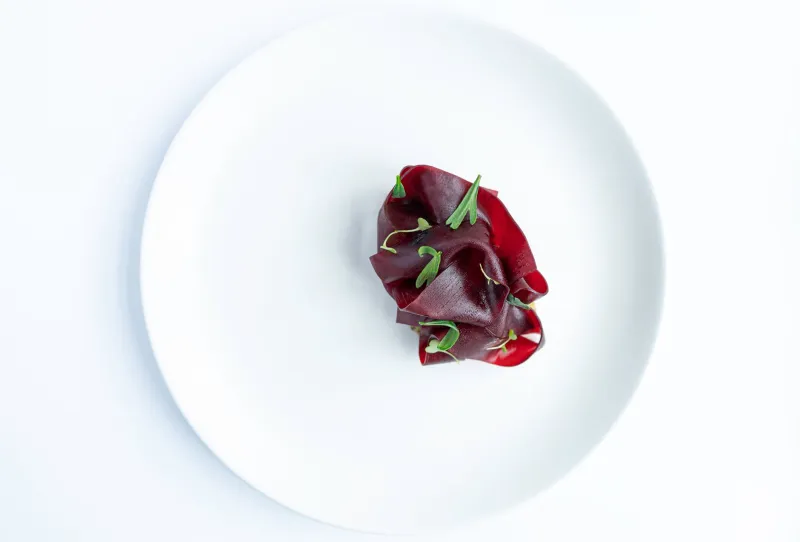
A quiet revolution is underway in Canada's most thoughtful dining rooms — one that looks, at first glance, almost boring. Chefs across the country are stripping their plates back to the essentials, trading elaborate garnishes and multi-component constructions for clean presentations that let exceptional ingredients do the talking. The result? Some of the most memorable meals this country has ever produced.
Simplicity, it turns out, is not the easy path.
The Tyranny of the Spectacular
For a while there, fine dining in Canada looked a lot like a competition to see who could fit the most ideas onto a single plate. Smears, foams, powders, edible flowers, tweezers, liquid nitrogen — the kitchen as laboratory, the plate as canvas, the diner as audience for a performance they hadn't quite asked for.
None of that is inherently wrong. Technique matters. Creativity matters. But somewhere along the way, the spectacle started to overshadow the substance. Diners left impressed but not necessarily moved. They photographed their food more than they tasted it.
The chefs now pushing back against that tendency aren't doing it out of laziness or nostalgia. They're doing it out of conviction. They believe, deeply, that a single perfectly prepared piece of fish — plated cleanly, served at the right temperature, seasoned with precision — can be more profound than a twelve-component tasting course that exhausts the palate before the third bite.
They're proving it, too.
Ingredients as Argument
The philosophical core of intentional simplicity is this: if your ingredient is good enough, it doesn't need to be rescued or disguised. It needs to be respected.
That means sourcing with obsessive care. A chef committed to restraint spends as much time building relationships with farmers, fishers, and foragers as they do developing technique. Because when your dish is three components rather than twelve, every one of those components has to be extraordinary.
In British Columbia, this approach has a natural home — the province's access to wild salmon, spot prawns, and foraged mushrooms gives chefs a pantry that practically argues for minimalism on its own. Let the prawn be a prawn. Let the chanterelle be a chanterelle. Add heat, fat, acid, and salt with a steady hand, then get out of the way.
But the philosophy travels. In Quebec, chefs are applying the same thinking to heritage grains, aged local cheeses, and lake fish that used to be treated as secondary to imports. In Ontario, the focus on root vegetables, cold-pressed oils, and wood-fire cookery is producing plates that feel simultaneously ancient and completely current.
The common thread is trust — trust in the ingredient, and trust in the diner's ability to appreciate what's in front of them without being guided through it with a forceps and a verbal essay.
What Restraint Actually Looks Like
To be clear: simple isn't the same as sparse. A plate built around restraint isn't a plate with nothing on it. It's a plate where every element earns its place and nothing is present for decorative or performative reasons alone.
Consider a dish that arrives as follows: a shallow bowl, a pool of deeply reduced broth the colour of amber, two or three pieces of braised short rib arranged without fuss, a scattering of pickled mustard seeds, a single herb sprig. That's it.
Nothing about it photographs dramatically. But the smell hits you before the bowl reaches the table. The first spoonful of broth is so concentrated and precise that it stops conversation. The meat gives way with almost no resistance. The mustard seeds cut the richness at exactly the right moment.
That dish tells a story — about patience, about skill, about an ingredient treated with total seriousness. It doesn't need to announce itself. It just needs to be tasted.
This is what the best practitioners of intentional simplicity are after. Not minimalism as aesthetic, but minimalism as honesty.
The Diner's Role
There's a subtle shift in expectation required from guests who sit down to this kind of cooking. When a plate arrives with three elements on it, there's no visual complexity to hide behind. The meal asks something of you — attention, presence, a willingness to slow down and actually notice what you're eating.
For diners accustomed to the theatrical fine dining experience, this can feel disorienting at first. Where's the drama? Where's the story the server is supposed to tell?
But for those willing to meet the food on its own terms, the payoff is significant. Meals eaten this way tend to be remembered differently — not as spectacles, but as experiences. You remember specific flavours, specific moments of surprise or pleasure. You remember the conversation you were having when a particular dish arrived, because the dish didn't interrupt the conversation — it deepened it.
This is, arguably, what dining out is supposed to feel like.
Hospitality That Matches the Food
Restaurants committed to this philosophy tend to extend the same sensibility to their service and atmosphere. The room is warm but uncluttered. The servers are knowledgeable without being theatrical. The wine list prioritizes producers with a clear point of view over labels that impress by reputation alone.
At Resto Maynard, this ethos is woven into everything from the menu design to the way tables are set. Warm Canadian hospitality doesn't mean overwhelming guests with attention — it means reading the room, giving people space to be present, and trusting that a well-timed refill matters more than a perfectly rehearsed dish description.
Simplicity at the table, like simplicity on the plate, is about knowing what to leave out.
The Loudest Flavours Need the Quietest Stages
There's a paradox at the heart of this movement: the most flavour-forward meals often arrive on the most understated plates. When you remove the noise, everything else gets louder.
Canadian chefs who have committed to this approach aren't making a statement about what fine dining should be for everyone else. They're just cooking with integrity — honoring their ingredients, respecting their guests, and trusting that authenticity, done well, is more than enough.
In a dining landscape that has sometimes confused complexity with quality, that's a genuinely radical act.