Bowls, Braises, and Belonging: Why Canadian Comfort Food Is Having Its Most Exciting Moment Yet
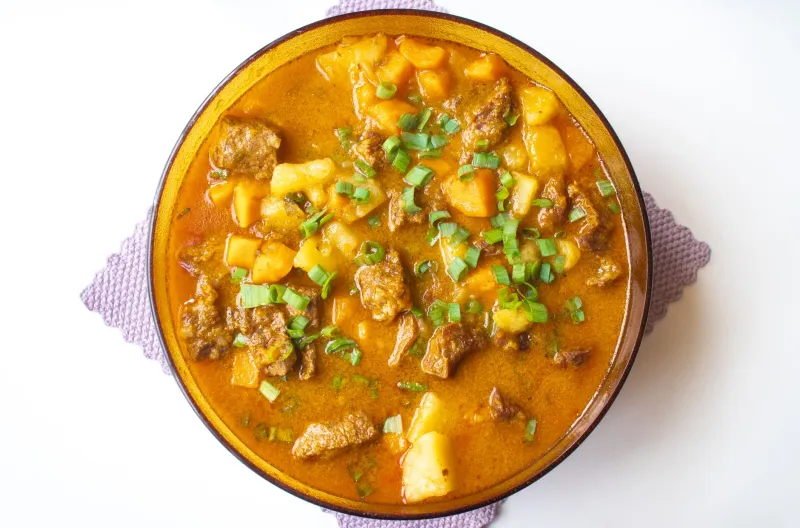
There's a particular kind of magic that happens when a dish lands on the table and your shoulders drop two inches. You didn't know you were tense. You didn't realize you were hungry for something specific. And then there it is — a bowl of something steaming, something golden and slow-cooked, something that smells exactly like a memory you forgot you had.
That's what Canadian comfort food does at its best. And right now, in restaurants from Halifax to Victoria, it's doing it better than ever.
More Than Just Nostalgia
For a long time, comfort food was treated as the culinary equivalent of a cozy sweater — reliable, unpretentious, and not exactly something you'd brag about. It lived in diners and church basements, in grandmothers' kitchens and hockey arena canteens. It wasn't the kind of thing that made it onto a tasting menu.
That's changing fast.
A growing number of Canadian chefs are taking the emotional power of comfort food seriously — treating it not as a lesser category of cooking, but as one of the most technically demanding and culturally meaningful things they can put on a plate. The challenge isn't just to replicate a feeling; it's to deepen it, sharpen it, and make it resonate with people who've grown up eating food from a dozen different culinary traditions.
"Comfort isn't a flavour," says one Montreal chef who recently overhauled her winter menu to centre it around braised and slow-cooked dishes. "It's a relationship. You're cooking to meet someone where they are emotionally, not just physically."
The New Language of Warmth
What does Canadian comfort food actually look like in 2024? That depends enormously on where you are — and who's cooking.
In Quebec, the classics are getting a quiet glow-up. Tourtière is showing up with wild boar and juniper. Pea soup is being finished with house-cured cream and a scattering of crispy lardons. The bones of the dish are familiar; the finishing touches are anything but.
In the Prairie provinces, beef remains king — but the cuts and techniques have shifted. Short ribs braised in local dark lager, served over whipped potato with pickled mustard seeds. Bison chili finished with roasted dried chilies sourced from small Alberta producers. These are dishes that honour the region's ranching heritage while pushing the flavour somewhere new.
On the coasts, comfort food often means seafood cooked low and slow — chowders with depth and body, fish pies with flaky tops and rich, herb-laced fillings, smoked salmon worked into pasta dishes that feel simultaneously West Coast and deeply Italian.
And in cities like Toronto and Vancouver, where the population has been shaped by wave after wave of immigration, comfort food is increasingly multicultural by default. Butter chicken poutine. Congee with a side of bannock. Korean-inflected mac and cheese. These aren't fusion gimmicks — they're honest expressions of what home tastes like for an increasingly diverse diner.
Why It Matters Right Now
It would be easy to frame this comfort food renaissance as a simple reaction to difficult times — and there's some truth to that. Canadians have been through a lot over the past few years, and there's something deeply human about reaching for food that feels safe and familiar when the world feels anything but.
But the chefs driving this movement will tell you it's about more than that. It's about rethinking what fine dining actually means.
"We spent years chasing complexity for its own sake," reflects one Toronto restaurateur who pivoted her tasting menu concept toward a more generous, family-style format two years ago. "Twelve courses, two bites each, beautiful but cold. And then I watched people come in tense and leave tense. The food wasn't actually feeding them."
Her new approach — longer tables, shared plates, dishes built around slow-cooked proteins and seasonal vegetables — has, she says, transformed the energy of her dining room. "People linger. They talk to each other. They order dessert."
That shift in dining room energy is something diners notice too. A regular at a comfort-focused spot in Winnipeg described the experience this way: "It's not fancy, but I feel more nourished when I leave than I do at places that cost three times as much. Something about the food is actually taking care of you."
Technique Is the Secret Ingredient
Here's what separates a great comfort dish from a merely adequate one: time and technique. The best braised short rib didn't get that way in an hour. That chowder didn't develop its depth without a proper stock, built over bones and aromatics and patience.
What modern Canadian chefs are doing is applying serious culinary training to dishes that were historically made by home cooks — and the results are revelatory. It turns out that when you apply classical French technique to a Québécois cassoulet, or use Japanese dashi as the base for a Maritime fish stew, something extraordinary happens. The dish becomes both more itself and something entirely new.
This is, arguably, the most exciting development in Canadian restaurant cooking right now. Not the avant-garde, not the hyper-local tasting menu, but the humble, generous, soul-feeding bowl of something wonderful — made with the kind of care that only a trained kitchen can bring.
Coming In from the Cold
Winter in Canada has always been the season that tests us. The cold is real, the dark is long, and the need for warmth — physical and emotional — is genuine. It's no coincidence that this comfort food renaissance is most visible in the colder months, when Canadians are looking for reasons to gather.
Restaurants that lean into that need — that design their menus, their atmospheres, and their hospitality around the idea of shelter and warmth — are finding that diners respond with something rarer than a good review: loyalty.
At Resto Maynard, that philosophy has always been close to the heart of what we do. Authentic flavours, warm hospitality — not as a tagline, but as a genuine way of thinking about what a meal can be. Because at its best, that's exactly what a great comfort dish is: a small act of care, delivered on a plate, in the middle of a long Canadian winter.
And right now, that matters more than ever.