Pour Decisions: How Canada's Beverage Experts Are Matching Drinks to Dishes in Ways You've Never Tasted Before
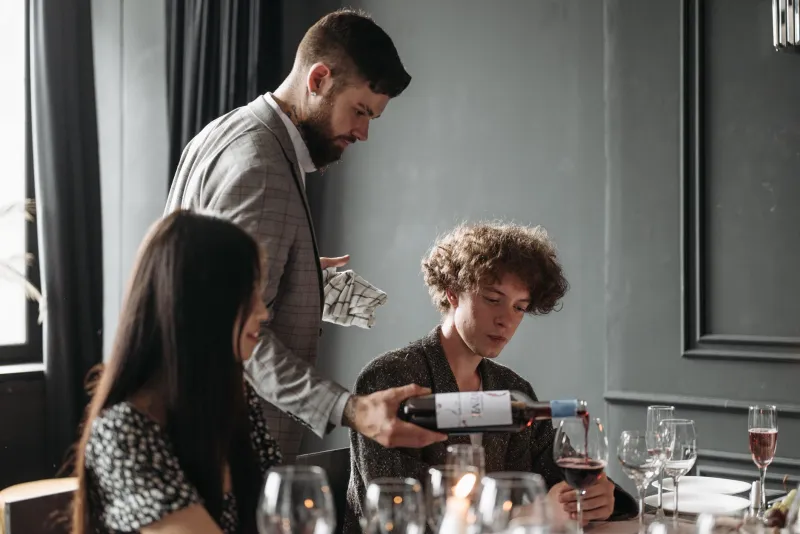
Ask a Canadian restaurant-goer what they'd like to drink with dinner and the answer, for decades, was almost always some version of wine. Maybe a beer with the burger. A Caesar to start. But largely, the beverage program at most restaurants was an afterthought — a list of serviceable bottles and a few cocktails that changed with the seasons.
Something has quietly shifted. Walk into some of the most talked-about dining rooms in Canada right now and you'll find beverage directors who treat the drink pairing with the same obsessive attention a chef gives to a sauce. The results are, to put it plainly, a little bit mind-bending.
The Person Behind the Pour
The title of "sommelier" once meant one thing: an expert in wine. Today, the most forward-thinking practitioners of that craft have expanded their scope dramatically. They're sourcing single-origin teas from British Columbia growers. They're working with local cideries to develop pours that complement specific dishes on a menu. They're fermenting their own shrubs in-house and pairing them with courses the way a winemaker thinks about terroir.
"Wine is still central to what we do," says one beverage director at a well-regarded Toronto restaurant. "But if I've got a dish built around smoked whitefish and pickled ramps, sometimes the most interesting thing I can put next to it isn't a Burgundy — it's a cold-pressed apple and burdock shrub from a producer two hours north of the city."
That kind of thinking — lateral, locally rooted, and deeply curious — is becoming the hallmark of a new generation of Canadian beverage professionals.
Craft Beer as a Serious Pairing Partner
Canada's craft beer scene has matured considerably over the past decade, and the country's best brewers are now producing beers complex enough to stand alongside ambitious cooking. Beverage directors have noticed.
A saison from a Quebec microbrewery, with its peppery, yeasty character, can do things alongside a charcuterie board that a glass of Champagne simply can't. An Imperial stout from a Vancouver Island brewery — dark, roasty, and faintly sweet — can echo and amplify the flavours in a slow-braised short rib in ways that feel almost symphonic.
The trick, say the experts, is understanding what a pairing is actually supposed to do. "You're not just looking for flavours that match," explains one beverage consultant who works with several Canadian restaurants on their non-wine programs. "Sometimes you want contrast — acidity cutting through fat, bitterness lifting sweetness. Beer gives you so many more tools to work with than people realize."
Some restaurants are now running dedicated beer pairing menus alongside tasting menus — a development that would have seemed eccentric a decade ago and now feels entirely natural.
The Fermented Frontier
Beyond beer and wine, the most adventurous beverage programs are exploring fermentation in all its forms. Kombucha — once the exclusive domain of health food shops — is showing up at upscale Canadian tables as a genuine pairing option, particularly for vegetable-forward dishes that might be overwhelmed by a tannic red.
Kefir-based drinks, water kefirs flavoured with local botanicals, and even lightly fermented fruit juices are making appearances on pairing menus. These drinks bring acidity, complexity, and a kind of living brightness that plays beautifully against rich, fatty, or heavily spiced food.
There's also a growing interest in non-alcoholic pairings that take the craft as seriously as any wine list. "The assumption used to be that if you weren't drinking alcohol, you got a glass of sparkling water and that was that," says one Vancouver beverage director. "Now we're building full non-alcoholic pairing journeys — six or eight drinks across a meal, each one designed to interact with the food in a specific way. It's some of the most creative work we do."
Canadian Whisky Finds Its Seat at the Table
For years, Canadian rye whisky was something you drank at the bar before dinner, not with it. That's changing as the country's distilling industry produces increasingly complex and food-friendly expressions.
A well-aged Canadian rye, with its characteristic spice and gentle sweetness, can be a revelation alongside cured meats, aged cheeses, or a dessert course built around dark chocolate and dried fruit. Some restaurants are now offering whisky pairings as a premium option for guests who want something other than wine — and finding that the response is enthusiastic.
"There's a real pride in Canadian whisky right now," notes one Ontario-based beverage director. "Guests are excited to explore it in a food context. It feels very Canadian, very of-the-moment."
Herbal Infusions and the Tea Renaissance
Perhaps the most unexpected development in Canadian beverage pairing is the growing seriousness with which chefs and beverage directors are treating tea and herbal infusions. This isn't the tea cart at the end of a meal — it's single-origin sencha served alongside raw seafood, or a house-blended chamomile and pine needle infusion paired with a dessert built around wild honey and local berries.
The logic is sound: tea offers extraordinary complexity, zero alcohol, and a connection to terroir that rivals wine. In a country with a growing domestic tea industry — particularly in British Columbia — there's also an exciting local story to tell.
What Makes a Pairing Unforgettable
For all the technique and creativity involved, the best beverage directors will tell you that a great pairing ultimately comes down to something simple: it should make the food taste better, and the drink taste better, and leave the diner feeling like they've experienced something they couldn't have planned for.
That element of surprise — of a sip completely recontextualizing a bite, or vice versa — is what separates a thoughtful pairing from a merely adequate one. It's a moment of genuine discovery at the dinner table, and it's one of the most generous things a restaurant can offer.
At Resto Maynard, we believe that what's in the glass matters as much as what's on the plate. The drinks that accompany a meal aren't supporting characters — they're part of the story. And right now, Canadian beverage professionals are telling some of the most interesting stories in the industry.