Beyond the Menu: How Canadian Restaurants Are Forging Deeper Bonds Through Hidden Dishes
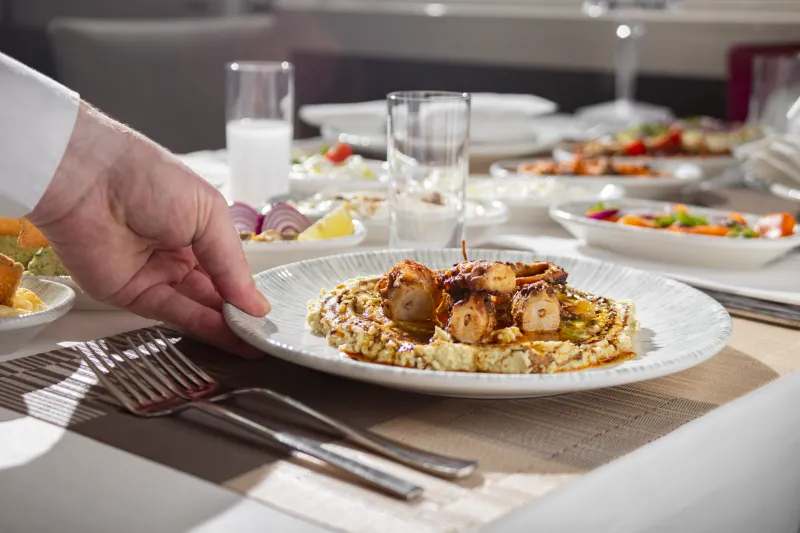
There's a particular thrill in being told, quietly, that there's something special waiting for you — something that isn't listed anywhere, that most people will never know about. It's the culinary equivalent of a handshake between a restaurant and its most devoted guests. Across Canada, that handshake is becoming more common, and what it represents goes far deeper than a clever marketing trick.
Secret menus, off-menu items, and underground dining experiences are reshaping the way Canadians relate to the restaurants they love. And if you pay close enough attention, you might just find yourself on the inside.
What Exactly Is a Secret Menu?
The term gets used loosely, and it's worth unpacking. At its most basic, a secret menu item is simply a dish — or drink — that a kitchen prepares but doesn't formally advertise. It might be a late-night staff meal that a chef quietly offers to regulars after the rush dies down. It could be a regional ingredient that only shows up when a supplier delivers something exceptional that week. Or it might be something more intentional: a chef's personal project, a flavour experiment, a dish tied to cultural memory that doesn't quite fit the restaurant's official narrative but deserves a place at the table anyway.
In Canada, where culinary identity is genuinely diverse and regional pride runs deep, secret menus often carry real emotional weight. A Newfoundland-born chef in Toronto might quietly prepare jiggs' dinner for a handful of regulars during the holidays — not because it's off-brand, but because it's personal. A Vietnamese-Canadian restaurateur in Calgary might offer a family-style pho variation that never appears on the laminated menu but has been feeding loyal customers for years.
The Chef's Perspective: Why Keep It Hidden?
Ask a chef why they maintain a secret menu and the answers are surprisingly candid. For many, it's about creative freedom. The printed menu represents a commitment — to consistency, to cost control, to customer expectations. The secret menu is where experimentation lives. It's where a cook can try something risky without the pressure of a full dining room's judgment.
"There's a dish I make maybe twice a week when the mood strikes," one Ottawa chef explained during a recent conversation about the trend. "It's not on the menu because I can't always source the ingredients reliably. But the people who know about it — they'll text me on a Tuesday asking if it's happening. That connection is worth more to me than any review."
That sentiment — the value of connection over coverage — is echoed throughout the Canadian restaurant scene. In an era when online reviews can make or break a business overnight, the secret menu offers something refreshingly analogue: trust built slowly, shared in person, passed along through word of mouth.
Underground Supper Clubs: The More Radical End of the Spectrum
Beyond individual restaurant kitchens, Canada's underground supper club scene represents the most committed version of this movement. These are ticketed, invitation-only dinners held in unconventional spaces — converted warehouses in Montreal, private homes in Victoria, rooftop gardens in Edmonton — where chefs cook without the usual constraints of a commercial dining room.
The menus at these events are rarely announced in advance. Guests often sign up knowing only the date, the neighbourhood, and the price. What arrives at the table is entirely up to the chef, and that surrender of control is precisely the point. It asks diners to trust completely — and in that trust, something genuinely communal tends to emerge.
These gatherings have become incubators for some of Canada's most exciting culinary talent. Chefs who've since opened celebrated restaurants in major cities first built their reputations one underground dinner at a time, cooking for fifty people who told fifty more.
How Diners Find Their Way In
So how does someone actually discover these hidden experiences? The honest answer is: by showing up consistently and being genuinely curious.
Regulars at any good restaurant develop a natural rapport with the staff over time. That rapport opens doors. Asking a server — sincerely, not demandingly — whether there's anything the kitchen is particularly excited about that evening is often enough to start a conversation. Many chefs appreciate the question more than diners realise; it signals that someone is paying attention.
Social media plays a role too, though often in subtle ways. Chefs in Canada frequently share glimpses of off-menu experiments on Instagram without explicitly labelling them as available to order. A sharp-eyed follower who messages directly and asks politely might be surprised by the response.
Local food communities — Facebook groups, neighbourhood supper club mailing lists, even old-fashioned community bulletin boards — are another avenue worth exploring. Cities like Vancouver, Toronto, Montreal, and Halifax all have active underground dining scenes that operate just below the surface of the mainstream restaurant world.
What This Trend Reveals About Canadian Dining Culture
At its core, the secret menu movement reflects something meaningful about how Canadians want to eat. There's a growing appetite — forgive the pun — for dining experiences that feel personal rather than transactional. People want to feel known by their restaurants, not just served by them.
Canada's restaurant culture has always had a strong community dimension. From the neighbourhood diner that remembers your order to the family-run trattoria that sets aside a table for the same couple every Friday, the best Canadian dining experiences have never been purely about food. They've been about belonging.
Secret menus formalise that belonging in a small but meaningful way. They say: you've been coming here long enough, paying attention carefully enough, that we'd like to share something with you that we don't share with everyone.
A Note From the Resto Maynard Kitchen
Here at Resto Maynard, we understand the value of that kind of relationship. Our kitchen is always evolving, always experimenting, and always paying attention to the guests who make this place feel like home. The best conversations we have happen not when someone opens a menu, but when they set it down and ask what we're excited about today.
Next time you're in, try asking. You might be pleasantly surprised by what's waiting just beyond the page.