Same Dish, Different Soul: How Canada's Regions Put Their Own Stamp on the Food We Love
Ask ten Canadians what their favourite comfort dish is and you might get ten different answers — but ask them where they first had it, and suddenly the conversation gets really interesting. Canada is a country so geographically vast and culturally layered that even the most familiar foods shift character when you cross a provincial border. That's not a quirk. That's heritage doing exactly what it's supposed to do.
At Resto Maynard, we've always believed that the most honest food is food with a sense of place. So let's take a cross-country look at what makes Canadian regional cuisine one of the most quietly complex food stories on the planet.
The Maritimes: When the Ocean Is the Pantry
If you've ever sat down to a bowl of chowder in Halifax versus one made in, say, Calgary, you already know something is different — even if you can't immediately put your finger on it. In the Maritime provinces, the ocean isn't just nearby; it's the defining ingredient in everything. Lobster, clams, scallops, and dulse seaweed have been central to Nova Scotian, New Brunswick, and PEI cooking for centuries, long before any of it became fashionable.
Acadian culinary traditions run especially deep here. Dishes like rappie pie — a labour-intensive potato-and-meat casserole — speak to a resourcefulness born out of isolation and a deep relationship with the land and sea. Fresh fish isn't a premium upgrade in the Maritimes; it's the baseline expectation. The salt air, the tidal rhythms, the generational fishing families — all of it ends up on the plate in ways that are almost impossible to replicate anywhere else.
What this teaches us is that geography doesn't just influence what ingredients are available. It shapes the entire philosophy of how people cook.
Québec: French Roots, New World Ingredients
Québec's food culture is arguably the most distinct in the country, and it wears that distinctiveness proudly. The French colonial influence is obvious in the technique — think tourtière, pea soup, and sugar pie — but what makes Québécois cuisine genuinely fascinating is how those European traditions collided with the ingredients of the Canadian wilderness.
Maple syrup is the obvious example, but it goes much further than that. Wild game, fiddleheads, and foraged mushrooms found their way into a culinary tradition originally built on Norman French cooking, and the result is something that belongs entirely to this place and nowhere else. The cabane à sucre (sugar shack) experience isn't just a meal; it's practically a seasonal ritual that connects Québécois families to both their Indigenous and French-Canadian ancestry.
There's also the urban dimension. Montréal's smoked meat, bagels, and poutine have taken on lives of their own and spread across the country — but locals will tell you (with some conviction) that they simply don't taste the same outside the city. They're probably right.
The Prairies: Big Sky, Big Flavours
When people think of Prairie food, they often default to beef, and fair enough — Alberta is home to some of the finest cattle ranching in the world. But reducing the culinary identity of Manitoba, Saskatchewan, and Alberta to a single protein misses the fuller picture.
The Prairies have an enormous Ukrainian, Polish, and Mennonite settler heritage that quietly shaped the regional pantry. Perogies, cabbage rolls, and beet borscht aren't just ethnic comfort foods here — they're mainstream Prairie staples that you'll find at community fundraisers and family Sunday dinners with equal frequency. Bison, once hunted across these plains by Indigenous peoples for thousands of years, is making a genuine comeback on restaurant menus as chefs and diners reconnect with pre-colonial food traditions.
Canola, lentils, and durum wheat — crops that define the Prairie agricultural economy — also find their way into regional cooking in ways that go largely uncelebrated. The Prairies produce an enormous percentage of Canada's food supply, yet their own culinary identity often gets overlooked. That's a story worth correcting.
British Columbia: Where the Pacific Rewrites the Rules
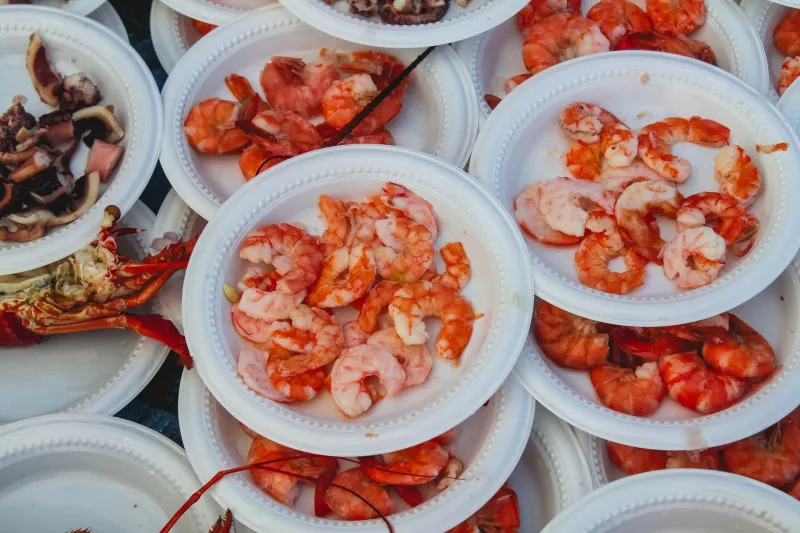
BC's food culture is shaped by a collision of forces unlike anywhere else in Canada. The Pacific Ocean delivers extraordinary seafood — wild salmon, Dungeness crab, spot prawns, and geoduck — while the province's unique microclimates produce everything from Okanagan stone fruits and ice wine grapes to Vancouver Island's artisan cheeses.
But perhaps the most defining characteristic of BC cooking is its relationship with Asia. Generations of Chinese, Japanese, Korean, Vietnamese, and South Asian immigration have woven themselves into the culinary fabric of the province so thoroughly that fusion isn't even the right word anymore. It's simply how people eat here. A bowl of ramen made with BC spot prawns, or salmon prepared with miso and ginger, doesn't feel like cultural borrowing — it feels like the natural result of communities living and cooking alongside each other for over a century.
The farm-to-table movement also found particularly fertile ground in BC, where the growing season is longer and the appetite for local, sustainable ingredients runs deep.
What This Means at the Table
At Resto Maynard, these regional stories aren't just interesting food history — they're genuine inspiration. Canadian cuisine doesn't have a single face, and we think that's something to celebrate rather than smooth over. When we source ingredients, develop seasonal menus, or think about how to honour a classic dish, we're always asking: where does this come from, and what does that place taste like?
The answer is almost always richer and more layered than you'd expect. A tourtière made with Prairie bison instead of pork tells a different story than one made in a Québec farmhouse kitchen, but both are authentically Canadian. Smoked salmon prepared with a nod to Pacific Coast Indigenous traditions sits alongside Maritime-inspired chowder on a menu that genuinely reflects this country's breadth.
That's the thing about Canadian regional cuisine: it doesn't ask you to choose a favourite. It asks you to keep exploring.
So the next time a dish surprises you — when the poutine tastes a little different, or the chowder has a flavour you weren't expecting — lean into that. Someone, somewhere, decided to make it their own way. And that decision has a whole history behind it.
We think that's worth savouring.